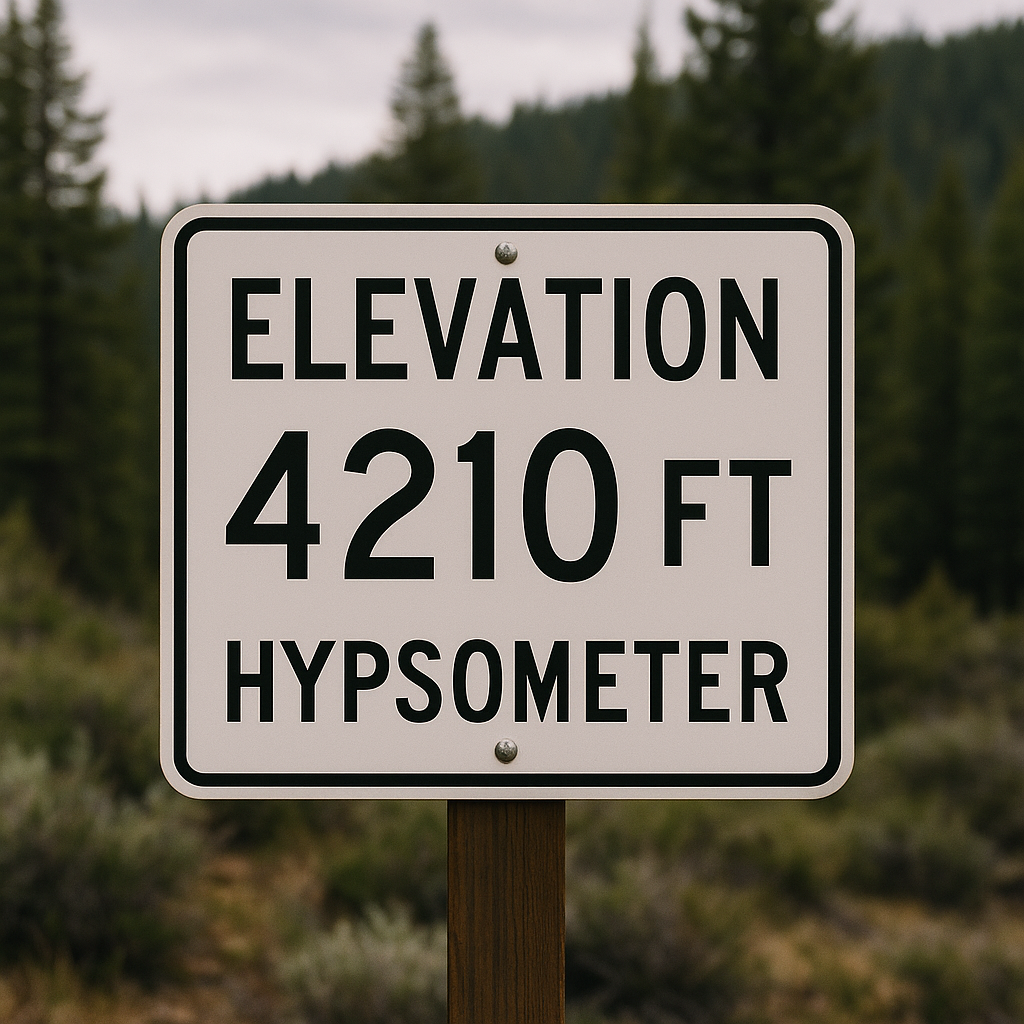
Definition:
A hypsometer is a scientific instrument used to measure altitude or elevation above sea level, typically by determining the boiling point of water, which decreases with altitude due to lower atmospheric pressure.
Etymology & Origin:
Hypsometer comes from the Greek word ὕψος (hypsos), meaning “height”, and the suffix -meter (from Greek metron), meaning “measure”.
It literally means “height-measurer.” The term entered scientific use in the 19th century during the rise of geodesy and precision instruments.
Examples:
- Early explorers used a hypsometer to estimate the altitude of mountain camps without needing topographic maps.
- The hypsometer calculated the height of the plateau based on the boiling point of water at that location.
- Derived from the Greek hypsos, the instrument’s name directly reflects its purpose: measuring height.